The jewelry manufacturing process begins long before a finished ring, necklace, or pair of earrings reaches your hands. From design and craftsmanship to final quality inspection, every stage plays an important role in bringing a jewelry piece to life.
A delicate ring, a dazzling necklace, or a pair of chic earrings. When we admire a piece of jewelry, our eyes are often first drawn to its design and brilliance. But have you ever wondered what processes a piece of jewelry goes through from the time you place an order until it actually arrives in your hands?
Jewelry making is far more than simply setting gemstones into metal. Design, mold making, casting, hand finishing, gemstone setting, polishing, and quality inspection—each step has its purpose. At GlobeGold Jewelry, we are a professional jewelry design and production team, offering you moissanite, lab-grown diamonds, lab-grown colored gemstones, and a variety of custom jewelry.
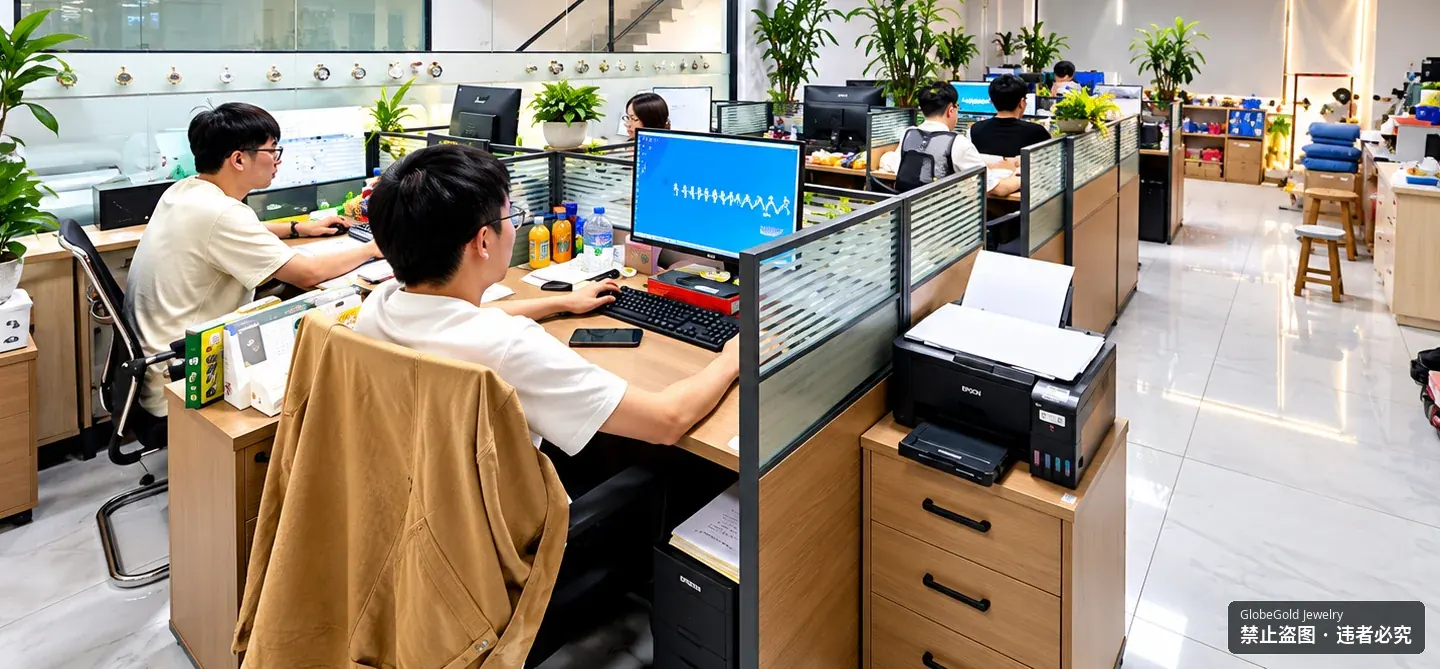
Today, I want to take you inside our actual jewelry production workshop to see how a piece of jewelry gradually transforms from an order design into a wearable and treasured piece.
Jewelry Manufacturing Process: Step by Step
01|Order Confirmation: It All Starts with Understanding Your Needs
The creation of a piece of jewelry begins with understanding your needs. Upon receiving an order, our first step is to verify the product’s style, size, material, gemstone type, color, quantity, and other customization requirements.
For rings, we need to confirm the band size, setting style, and the shape and size of the gemstones; for necklaces, bracelets, and earrings, we need to focus on the length, connection structure, wearing method, and overall proportions. For OEM/ODM orders from brand clients, this may also involve brand logos, exclusive designs, product specifications, and packaging requirements. These seemingly simple details actually determine whether subsequent production can be accurately executed.
We aim to minimize unnecessary modifications from the initial communication stage, ensuring your ideas are clearly and accurately presented. enter
02|Jewelry Design: Making Creativity Concrete
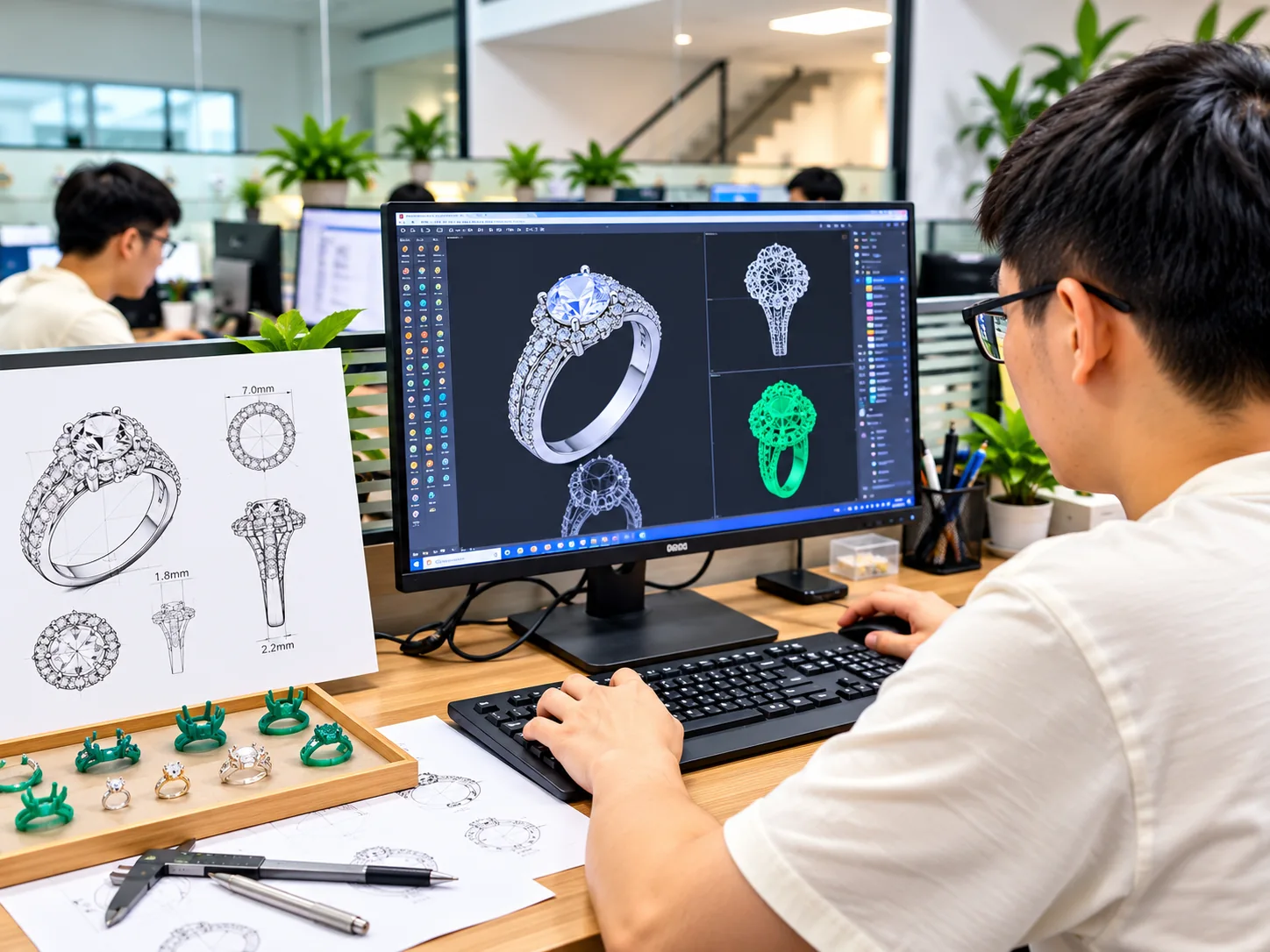
For jewelry requiring redesign or structural adjustments, the next step is usually to create design drawings or 3D models. Designers need to comprehensively consider the jewelry’s appearance, metal structure, gemstone arrangement, and actual wearing experience.
For example, a set ring not only needs to be aesthetically pleasing but also must consider the rationality of the setting structure and whether there is sufficient space to hold the gemstones; a bracelet needs to balance the overall shape with flexibility when worn. Computer-aided design (CAD) allows us to more clearly visualize the structure and details of jewelry before formal production.
For custom projects requiring design confirmation, you can view the design first before deciding whether to proceed to the next production stage. Not every piece of jewelry needs to be modeled from scratch. For designs with established maturity, existing production materials can usually be used directly to reduce redundant development. enter
03 | Wax Making and Finishing: From 3D Model to Solid Model
This is a very interesting step in the jewelry making process. Wax modeling is an important stage in the jewelry manufacturing process, especially for custom jewelry. It allows artisans to transform detailed designs into physical models before metal casting begins. In jewelry production using the lost-wax casting process, the design needs to be converted into a solid wax model.
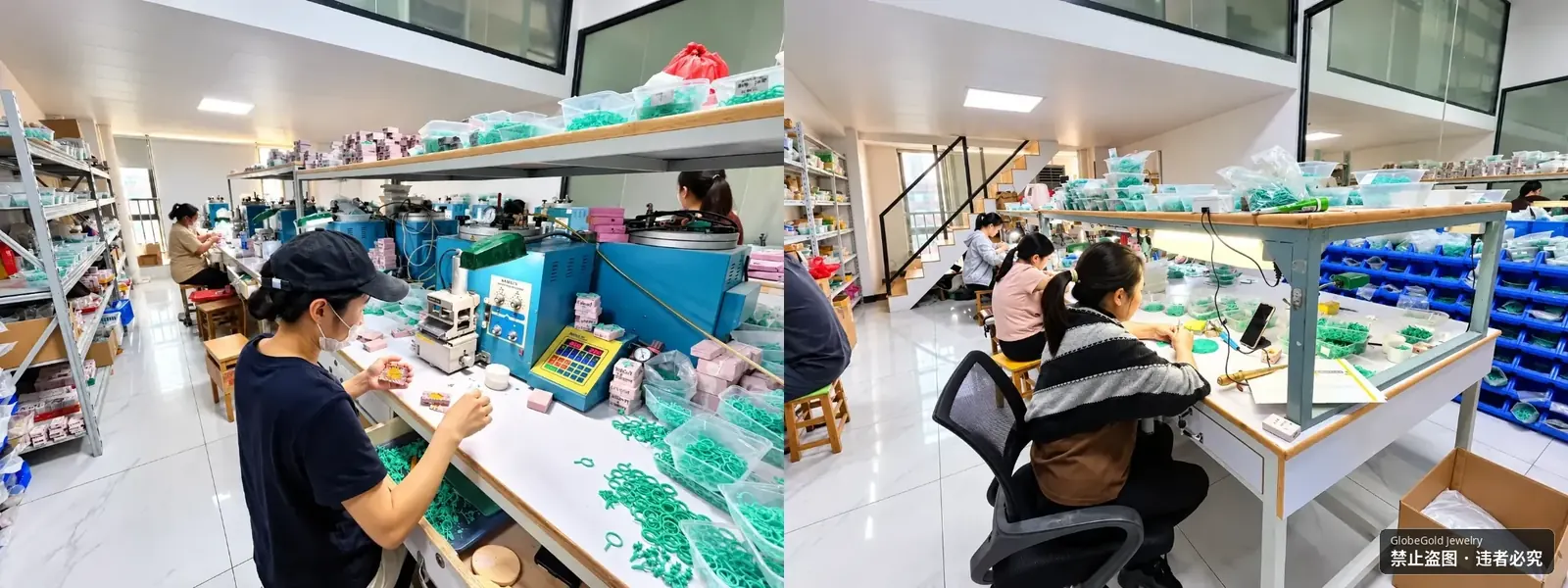
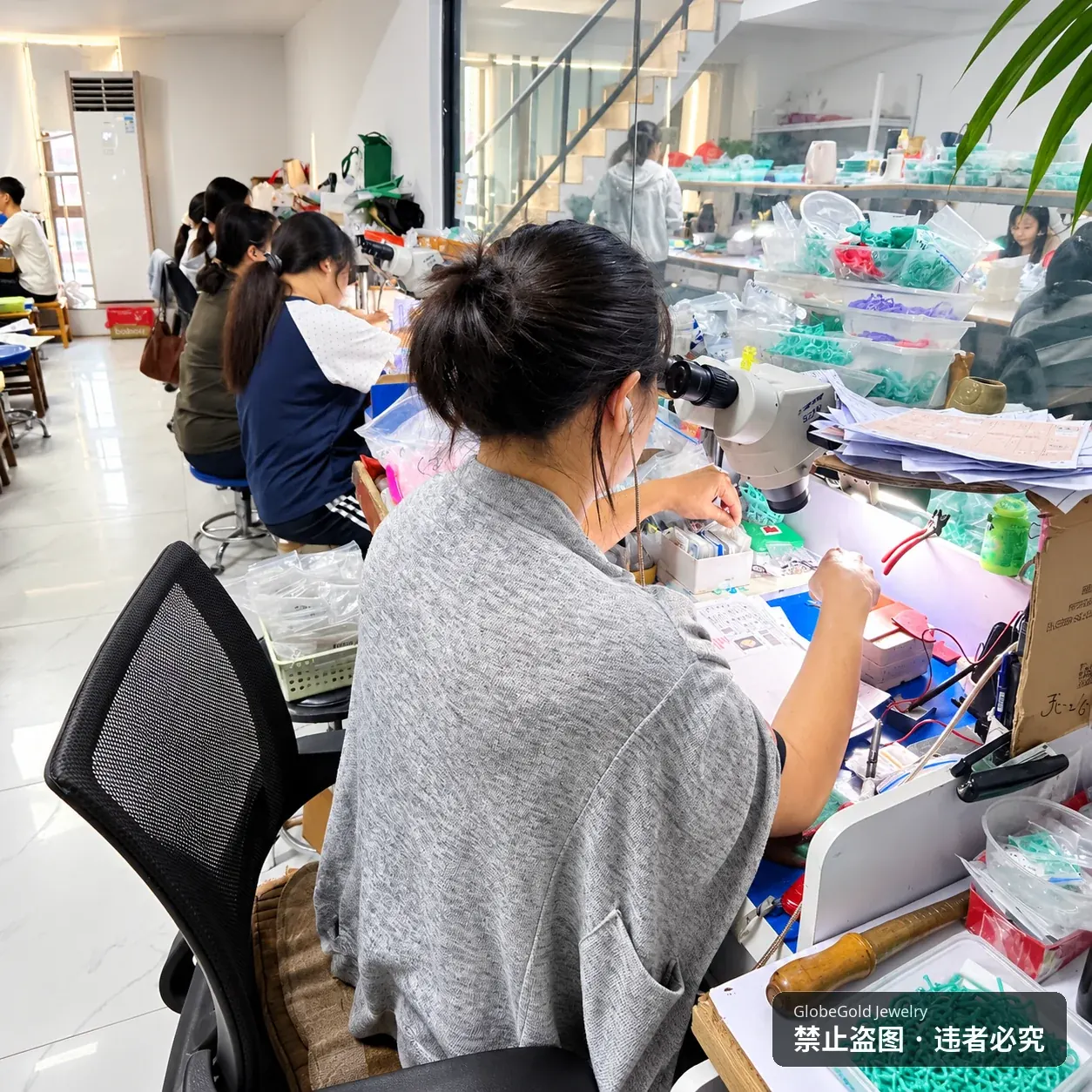
Depending on the style and production requirements, the factory may create models using 3D printing, wax injection molding, etc. The green wax pieces you see in the workshop are common intermediate products in this production process. Although these wax pieces are not yet the final metal jewelry, they already present the basic shape and structure of the future jewelry.
Workers need to carefully check the outline, size, and surface details of the wax model, manually finishing any areas that need repair. Even small model defects can affect the appearance of the subsequent metal casting. From this stage onward, the jewelry in the design sketches appears for the first time in a tangible form.
To learn more about traditional and modern jewelry production techniques, explore the jewelry manufacturing insights published by the Gemological Institute of America (GIA). enter
04 | Metal Forming: Giving Jewelry a True Shape
After the wax model is completed, products made using lost-wax casting enter the metal casting stage. The factory creates a high-temperature resistant mold, removes the wax model, and then pours molten metal into the mold cavity, shaping the metal into the form required by the design.
Different orders may use 925 sterling silver, gold of different karats, or other suitable jewelry metals. After the metal solidifies and is demolded, the craftsman obtains a metal blank with a preliminary shape. At this stage, the jewelry usually does not yet have the refined luster of the final product; the surface may still have gates, burrs, or other areas requiring further processing.
Furthermore, not all jewelry is made using casting. Some chains, handcrafted metal ornaments, or special structures may also be made through metalworking, joining, and welding. Different designs require the selection of appropriate production processes. enter
05 | Mold Making and Hand Finishing: Details Determine Finish
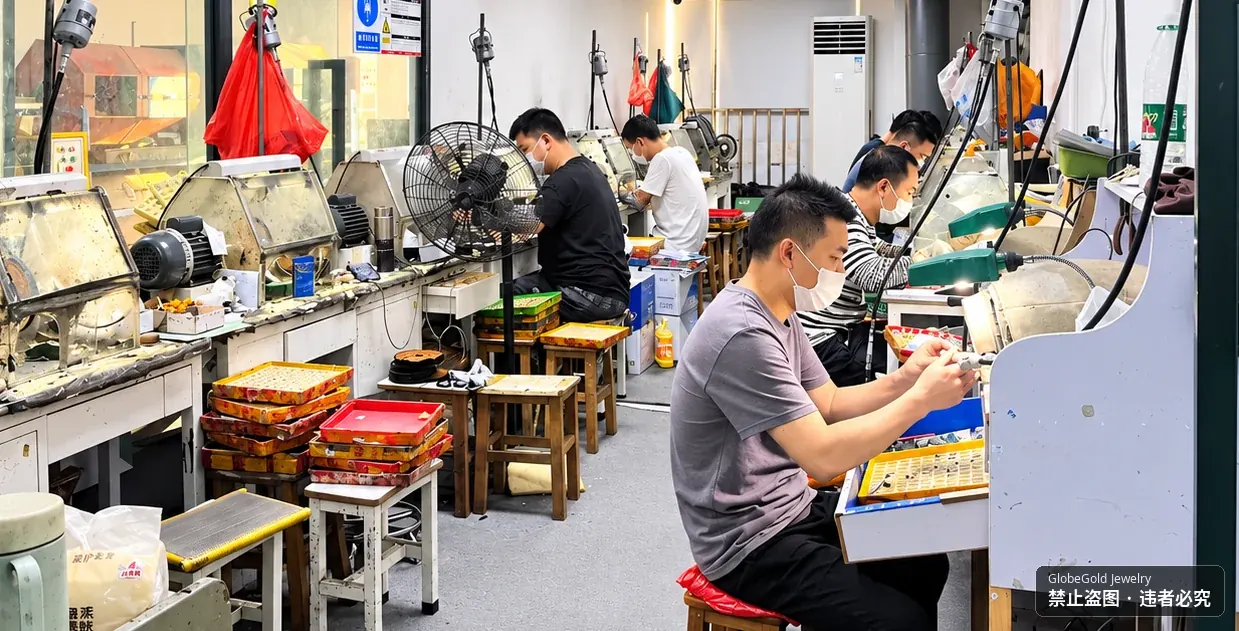
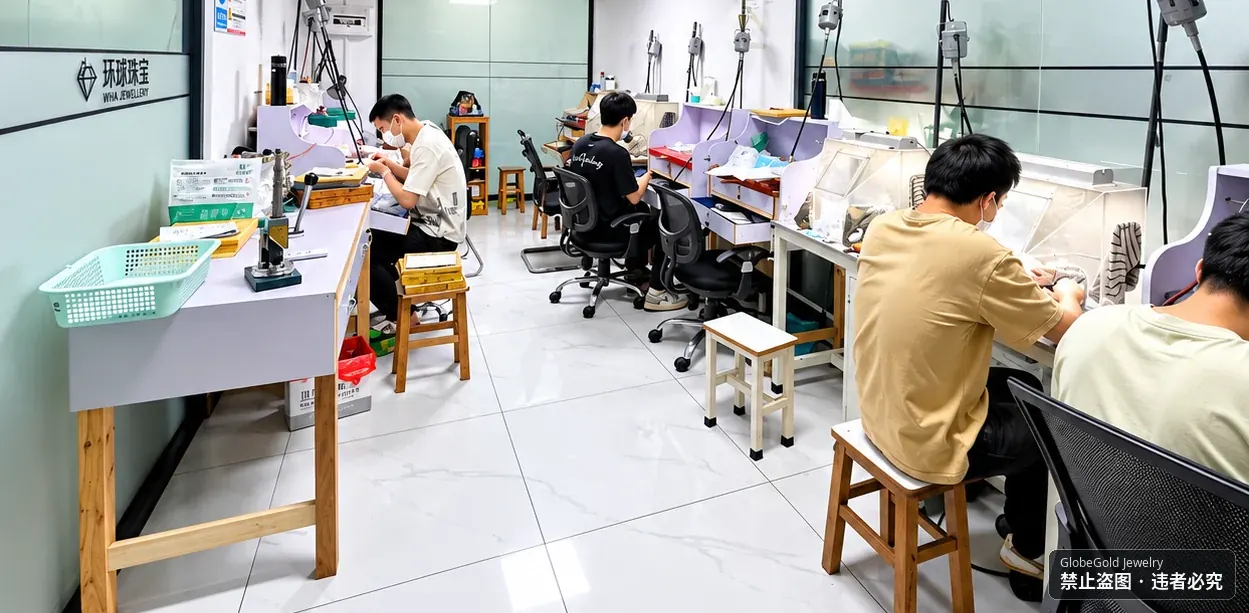
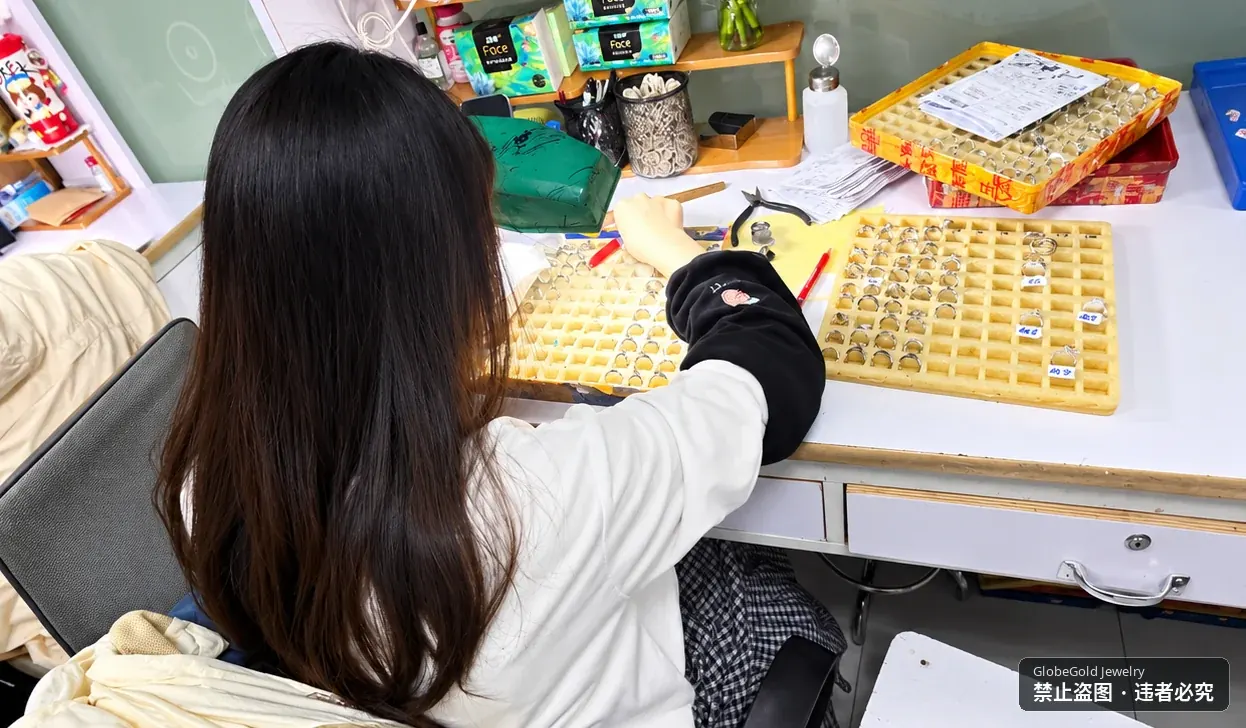
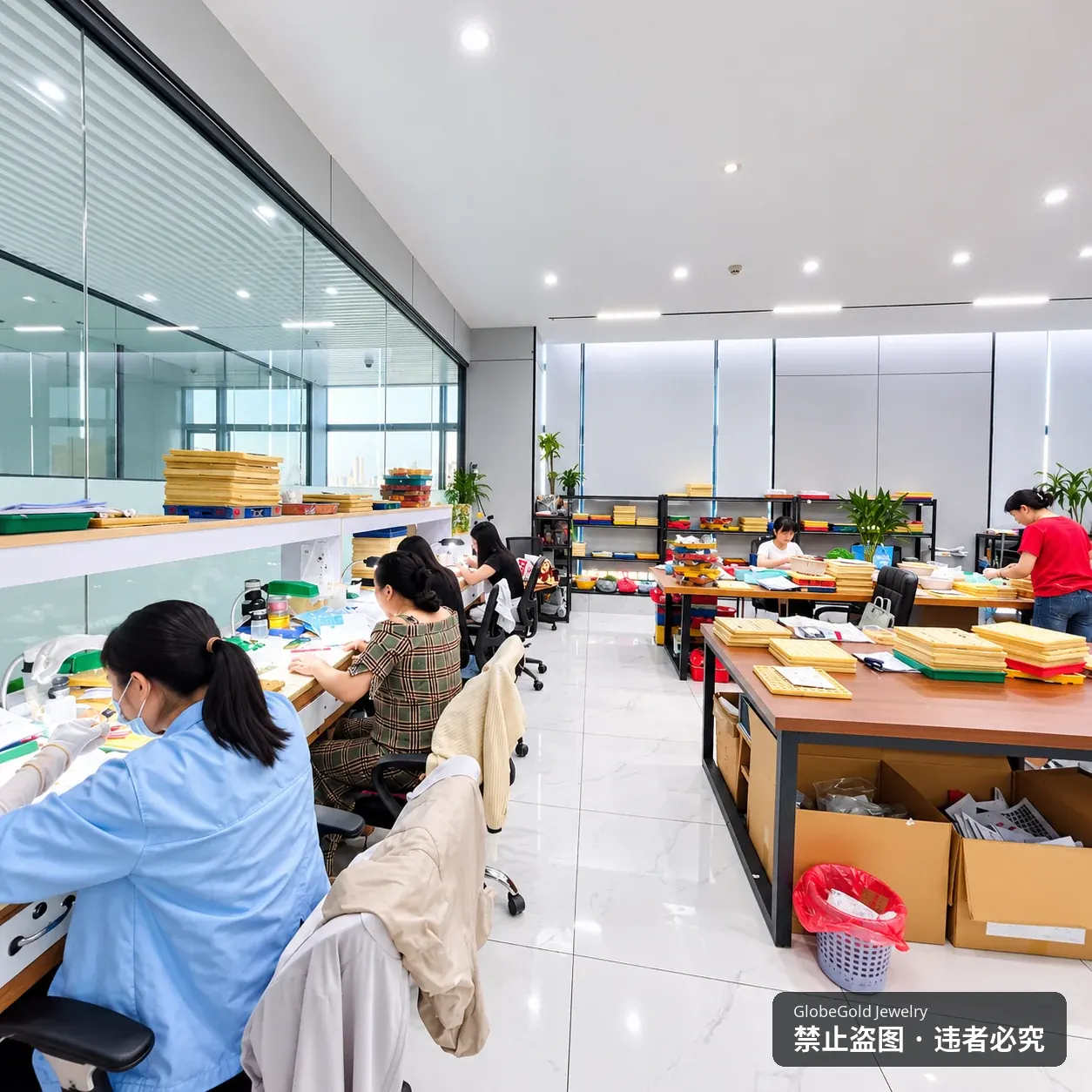
After the metal is formed, the jewelry enters a meticulous hand-finishing stage. In our production workshop, you can see artisans sitting at individual workbenches, using specialized tools to process different pieces of jewelry. These tasks may include cleaning gates, deburring, refining contours, adjusting details, and assembling or welding components that need to be connected.
For jewelry with multiple components, such as necklaces, bracelets, and some pendants, the treatment of the joints is particularly important. Artisans must not only focus on the appearance but also on the structural strength and freedom of movement when wearing the piece. Some details are not obvious to the naked eye but directly affect the final finish of the jewelry.
Mechanical equipment can improve the efficiency of some production processes, while experienced artisans are responsible for handling parts that require meticulous judgment and flexible operation. enter
06 | Gemstone Selection: Every Gem Has Its Place
For inlaid jewelry, gemstone preparation is equally important. Depending on the design requirements of different orders, you can choose moissanite, lab-grown diamonds, or cultured colored gemstones such as sapphires, rubies, and emeralds.
The shape, size, color, and overall harmony of the gemstones all affect the final effect. Especially for jewelry that requires multiple gemstones to form a pattern, the size matching and arrangement of the gemstones are crucial. The artisan needs to prepare suitable gemstones according to the design and setting structure, allowing them to be accurately placed in their designated positions.
For a piece of jewelry, true beauty comes not only from the brilliance of individual gemstones but also from the overall harmony. enter
07 | Precision Stone Setting: Perfect Harmony Between Gemstones and Metal
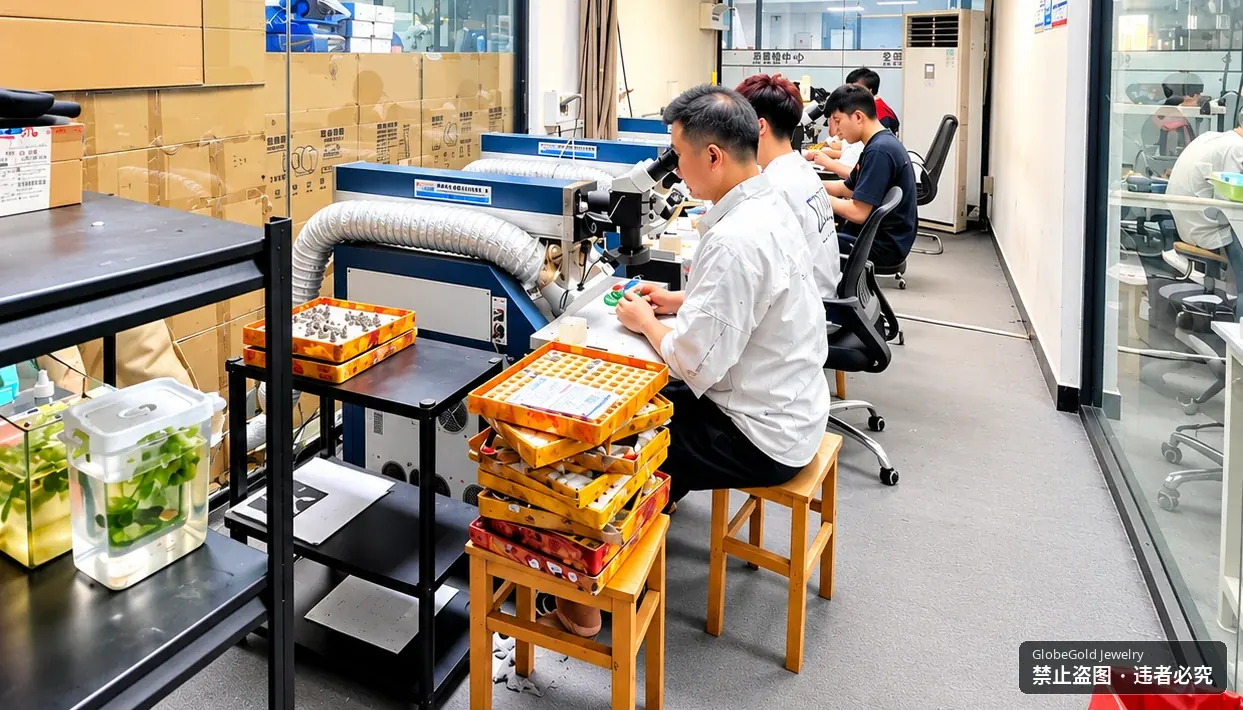
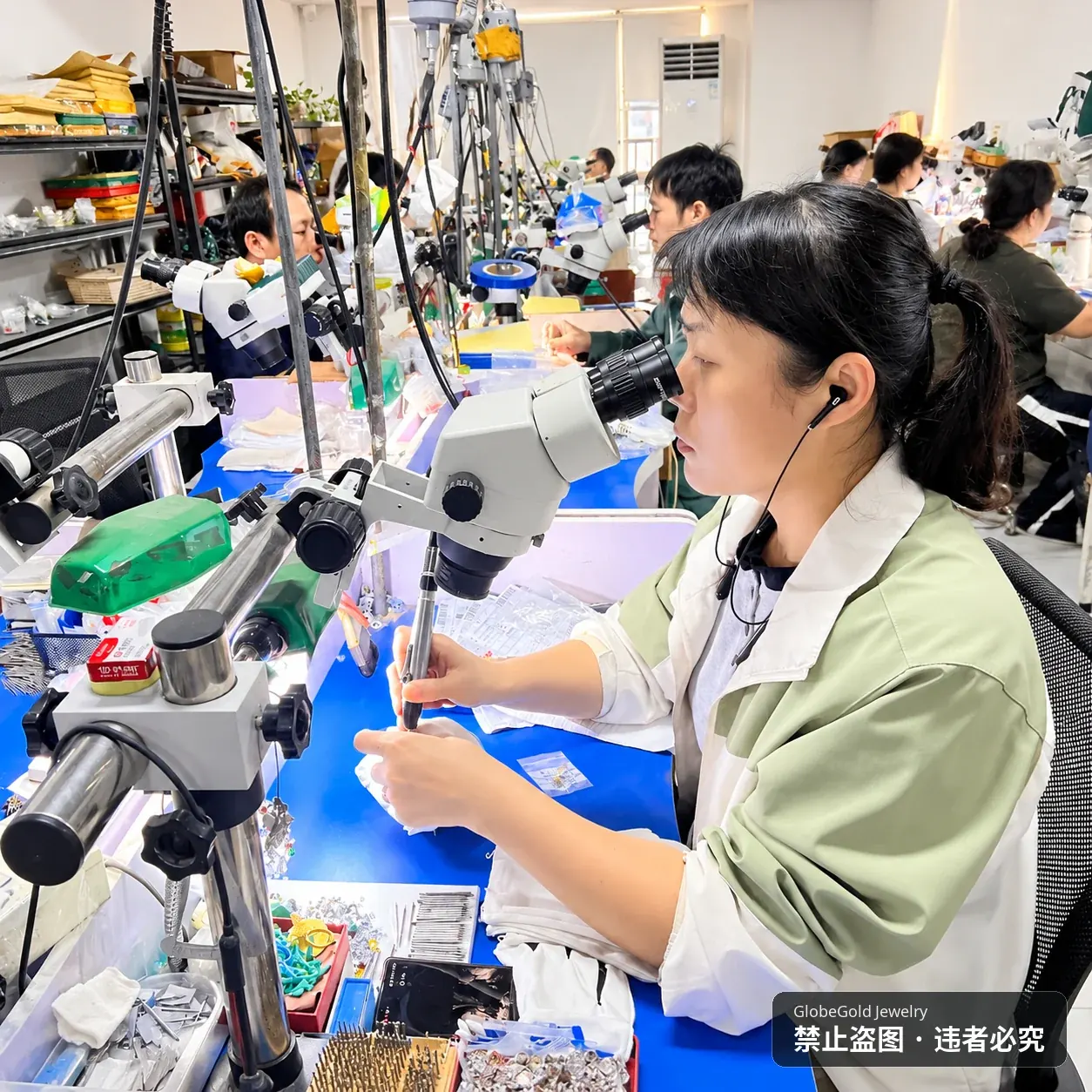
If design gives jewelry its personality, then stone setting is the stage where many pieces truly begin to shine. Stepping into the stone setting workshop, you’ll see artisans sitting intently in front of microscopes, their hands manipulating various delicate tools.
Common setting methods, depending on the jewelry design, include prong setting, bezel setting, and pave setting (we solemnly promise that all our Globegold products are hand-set without any glue). Different setting methods not only affect the appearance of jewelry but also the securing structure of the gemstones.
Setters need to carefully handle the position, angle, and surrounding metal fixings of the gemstones to ensure they are securely embedded in the design. This work is particularly demanding in pieces with multiple small gemstones, requiring patience and precision.
Sometimes, similar small operations need to be repeated many times on a single piece of jewelry to achieve a neat and harmonious visual effect. This is why, even with modern equipment, handcrafting remains an indispensable part of jewelry making. enter
08|Polishing and Surface Finishing: Presenting the Jewelry’s Final Brilliance
After the main finishing and setting, jewelry requires further finishing, cleaning, and polishing, depending on the specific craftsmanship. Polishing helps improve the smoothness of the metal surface, giving the jewelry a more refined visual effect.
For some products, factories may also apply rhodium plating, gold plating, or other suitable surface treatments according to design requirements to achieve different colors and appearances. Not all jewelry requires electroplating, and not all styles undergo surface finishing after gemstone setting.
The actual order may vary depending on the material, design structure, and setting method. Through these steps, a piece of jewelry gradually takes on a familiar finished product state. enter
09 | Quality Inspection: Beyond Sparkle, Meticulous Inspection is Essential
The completion of a piece of jewelry processing does not mean the production work is finished. Before packaging and shipping, we will conduct corresponding inspections based on the product type and order requirements.
For inlaid jewelry, we need to check whether the gemstones are secure, whether they are neatly arranged, and whether there are any obvious flaws on the surface (considering that jewelry may be subjected to bumps or collisions during long-distance transportation, our company has set up a dedicated 24-hour after-sales quality inspection department; your purchasing experience is always our top priority).
For rings, we need to check the size and overall appearance; for necklaces and bracelets, we need to check the connection points, clasp function, and flexibility when wearing them. In addition, we need to check the materials, style, quantity, and other agreed specifications required by the order. If any adjustments are found, the relevant products should be repaired or processed and then re-checked.
For you, the quality of jewelry isn’t just about its appearance upon arrival, but also about the actual wearing experience and the level of craftsmanship. enter
10 | Packaging and International Shipping: Ensuring Your Jewelry Arrives Safely
After production and inspection, the jewelry finally approaches its final destination. Depending on the type of jewelry and order requirements, the products will undergo appropriate cleaning, sorting, and protective packaging.
For personalized orders, we will arrange appropriate packaging according to the specific agreement. For wholesale and brand clients, we need to comprehensively consider order quantity, product classification, shipping protection, and any potential customized packaging needs.
After confirming the relevant delivery information, we will arrange a suitable international shipping method and provide you with logistics tracking information throughout the process. From the production workshop to jewelry stores, brand studios, or individual customers around the world, every order carries different expectations.
What we hope to do is make this journey from production to delivery clearer and smoother.
enter
More than just manufacturing jewelry, we bring every unique idea to life. A piece of jewelry could be a special gift, a cherished memory, or the first product launched by an independent jewelry brand. Different clients have different needs, but we treat every order with utmost care.
At GlobeGold Jewelry, we specialize in moissanite, lab-grown diamonds, lab-grown colored gemstones, and custom jewelry. Through our design and production teams, we provide products and customization services to individual consumers, jewelry retailers, designers, and wholesale clients.
From rings, earrings, and necklaces to bracelets, pendants, and jewelry sets, and from classic, minimalist, and modern styles to vintage, hip-hop, and luxury, we aim to offer our clients a wider range of materials, styles, and customization options.
Whether you’re looking for a piece of jewelry that suits you or planning to develop a new product line for your brand, we’re happy to discuss design, materials, and production plans with you. Because behind every finished piece of jewelry lies not only the production process but also the initial idea that gave birth to it.
Have an idea for your next jewelry piece? Contact GlobeGold Jewelry and tell us what you’re looking for.
Let’s turn ideas into wearable jewelry together. Explore More at https://ggjwl.com